
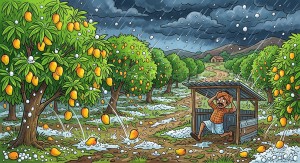
Hailstorms Damage Mango Orchards in Salem; Farmers Struggle Amid Climate Change
Unseasonal hailstorms and thunderstorms on Ugadhi evening caused damage to mango Farms in parts of Salem district, raising concerns among farmers just Month before the peak mango harvest season.
Farmers across the district reported hailstones falling along with strong winds and heavy rain, damaging delicate mango young fruits. The sudden weather event has led to fruit drop and bruising, which could significantly reduce the yield and quality of this year’s mango crop.
Mango Crop Damaged at a Critical Stage
The hailstorm struck during a crucial period when mango trees are in the fruit development stage. At this time, even a brief hailstorm can knock off developing fruits and damage matured fruits.
Mango farmers around Salem cultivate several premium varieties including:
- Banganapalli Mango
- Alphonso Mango
- Malgoa Mango
- Imam Pasand Mango
- Indian Miyazaki Mango
- Kalapdi Mango
- Senthoora Mango
Damage during this stage can reduce both quantity and market quality, affecting farmers’ seasonal income.
Climate Change Increasing Weather Uncertainty
Farmers say that unpredictable weather events have become more common in recent years due to excessive global warming. Earlier, mango growers could rely on stable seasonal patterns, but climate conditions are now changing rapidly.
Extreme weather affecting mango cultivation includes:
- Sudden hailstorms
- Unseasonal rainfall during flowering and fruit setting, harvesting
- Heatwaves followed by thunderstorms
- Irregular mango flowering cycles
Experts believe that climate change is making weather patterns more unstable, increasing risks for fruit crops like mangoes.
Economic Impact on Farmers
Mango cultivation requires months of investment, including irrigation, fertilization, pest management, and orchard maintenance. When hailstorms strike before harvest, farmers may face serious financial losses.
Potential impacts include:
- Reduced mango yields
- Lower fruit quality and market prices
- Increased wastage during sorting
- Loss of export-quality mangoes
For many growers in Salem district, mango farming is a major source of seasonal income.
Need for Climate-Resilient Agriculture
Experts recommend that farmers adopt several strategies to reduce climate risks:
- Improved weather monitoring and early warning systems
- Access to crop insurance schemes
- Climate-resilient orchard management practices
- Government support during extreme weather events
Such measures can help farmers reduce losses and protect future mango production.
FAQ
What caused the mango crop damage in Salem?
The damage was caused by unseasonal hailstorms combined with strong winds and rain that struck mango orchards during the fruit development stage.
Why are hailstorms harmful to mango crops?
Hailstones can knock off mango flowers, bruise fruits, and damage young branches, leading to fruit drop and reduced crop yields.
Which mango varieties are commonly grown in Salem?
Popular varieties grown in the region include Banganapalli Mango, Alphonso Mango, Malgoa Mango, and Imam Pasand Mango.
Is climate change affecting mango farming?
Yes.Absoultely 100% Climate change is increasing extreme weather events such as hailstorms, unseasonal rain, and heatwaves, which disrupt mango flowering and fruit development.
Can farmers protect mango Farms from hailstorms?
While hailstorms cannot be controlled by humans, but golbal pollution makes the climate unseasonal.