
🌾 Why Are Millets Becoming Popular Again?
Traditional Indian millets are making a strong comeback because they are naturally rich in dietary fiber, protein, essential minerals, and antioxidants. Unlike refined grains, unpolished millets retain their natural bran layer, offering better nutrition, improved digestion, steady energy, and long-lasting satiety. They are also environmentally sustainable, requiring significantly less water than rice while supporting traditional farming communities.
Why Should You Include Millets in Your Daily Diet?
For thousands of years, millets have been an integral part of Indian cuisine. Today, modern nutrition science supports what our ancestors already knew—these ancient grains are among the healthiest whole grains available. Whether you're looking to maintain a balanced diet, increase fiber intake, or simply enjoy wholesome traditional foods, millets are an excellent choice.
Each millet variety has its own unique nutritional profile, but all share one thing in common: they are minimally processed, naturally gluten-free, and packed with essential nutrients that support overall well-being.
Benefits of Eating Traditional Millets
- Rich in Dietary Fiber
- Excellent Source of Plant Protein
- Naturally Gluten-Free
- Low Glycemic Index Compared to Refined Grains
- Rich in Iron, Magnesium & Phosphorus
- Supports Healthy Digestion
- Keeps You Feeling Full for Longer
- Provides Slow and Steady Energy
- Suitable for Everyday Family Meals
- Supports Sustainable Farming Practices
1. Bajra (Pearl Millet) – The Energy-Rich Ancient Grain
Bajra, also known as Pearl Millet, is one of India's oldest cultivated grains and has been a staple food in many rural households for centuries. It is naturally rich in dietary fiber, plant-based protein, iron, magnesium, and essential minerals that help support an active and healthy lifestyle.
Unlike refined grains, unpolished Bajra retains its natural nutrients, making it an excellent choice for people looking for wholesome, minimally processed foods. It is especially popular during the winter season because of its warming nature and ability to provide sustained energy throughout the day.
🌾 Why Choose Bajra?
Bajra is an excellent alternative to polished rice and refined wheat. It is filling, nutritious, and highly versatile, making it suitable for breakfast, lunch, or dinner.
Health Benefits of Bajra
- Provides Long-Lasting Energy
Complex carbohydrates digest slowly, helping you stay energized for longer. - Supports Digestive Health
Rich dietary fiber promotes healthy digestion and regular bowel movements. - Naturally Rich in Iron
Iron contributes to normal oxygen transport and healthy red blood cell formation. - Supports Heart Health
Whole grains and dietary fiber contribute to a heart-friendly diet. - Helps Maintain Healthy Blood Sugar
Its slower digestion compared to refined grains may help reduce rapid spikes in blood glucose when consumed as part of a balanced meal. - Good Source of Magnesium
Magnesium supports normal muscle function, nerve function, and bone health.
Nutritional Highlights
| Nutrient | Benefit |
|---|---|
| Dietary Fiber | Supports digestion and promotes fullness |
| Protein | Helps build and repair body tissues |
| Iron | Supports healthy hemoglobin formation |
| Magnesium | Supports muscles, bones, and heart health |
| Phosphorus | Contributes to healthy bones and teeth |
Popular Uses of Bajra
- Bajra Roti
- Bajra Khichdi
- Bajra Pongal
- Bajra Upma
- Bajra Porridge
- Healthy Millet Bowl
- Millet Salad
How to Cook Bajra
- Wash the millet thoroughly 2–3 times.
- Soak for 6–8 hours for better texture.
- Cook using 1 cup Bajra with 3 cups water.
- Pressure cook for 4–5 whistles or cook until soft.
- Serve as a rice replacement or prepare traditional recipes.
2. Barnyard Millet – The Light & Nutritious Super Grain
Barnyard Millet is one of the most nutritious traditional millets grown in India. It is naturally high in dietary fiber, easy to digest, and one of the lowest-calorie whole grains available. Its mild taste and fluffy texture make it an excellent substitute for rice in everyday cooking.
This millet is widely appreciated by families looking for wholesome meals that are both nutritious and satisfying. It cooks quickly and pairs beautifully with vegetables, lentils, and traditional Indian spices.
🌱 Why Barnyard Millet Deserves a Place in Your Kitchen
Barnyard Millet is light on the stomach, rich in nutrients, naturally gluten-free, and suitable for people of all age groups. It is an excellent grain for modern healthy lifestyles.
Health Benefits of Barnyard Millet
- Rich in Dietary Fiber
Supports digestive wellness and promotes satiety. - Naturally Low in Calories
An excellent whole grain for balanced meal planning. - Supports Healthy Blood Sugar
Its fiber-rich nature helps slow digestion compared to refined grains. - Rich Source of Iron
Iron contributes to normal energy metabolism and oxygen transport. - Supports Heart-Friendly Nutrition
Whole grains can be part of a heart-conscious diet. - Naturally Gluten-Free
Suitable for individuals seeking gluten-free grain options.
Nutritional Highlights
| Nutrient | Benefit |
|---|---|
| High Fiber | Supports digestion and fullness |
| Protein | Helps maintain muscle health |
| Iron | Supports healthy blood formation |
| Calcium | Contributes to bone health |
| Complex Carbohydrates | Provides steady energy throughout the day |
Popular Uses of Barnyard Millet
- Millet Rice
- Lemon Millet
- Vegetable Pulao
- Barnyard Millet Pongal
- Millet Biryani
- Millet Idli
- Millet Dosa
- Healthy Salad Bowls
How to Cook Barnyard Millet
- Wash thoroughly before cooking.
- Soak for about 30 minutes for softer texture.
- Cook 1 cup millet with 2½ cups water.
- Cook for 15–20 minutes until fluffy.
- Use as a direct substitute for rice in most recipes.
💡 Healthy Cooking Tip
For a balanced and nutritious meal, combine cooked Barnyard Millet with vegetables, lentils, sprouts, or legumes. This combination provides fiber, protein, vitamins, and minerals while creating a wholesome traditional Indian meal.
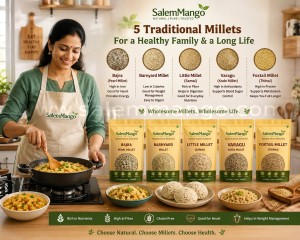
3. Little Millet (Samai) – Small Grain with Big Nutrition
Little Millet, popularly known as Samai in South India, is one of the finest traditional millets for everyday cooking. Although small in size, it is naturally rich in dietary fiber, plant protein, essential minerals, and antioxidants. It cooks quickly, has a mild flavor, and can easily replace white rice in almost every meal.
For families looking to adopt healthier eating habits, Little Millet is an excellent choice. It provides sustained energy, supports digestion, and keeps you feeling satisfied for longer. Because it is minimally processed, it retains more nutrients than refined grains.
🌾 Why Choose Little Millet?
Little Millet is easy to digest, naturally gluten-free, and suitable for daily meals. It blends perfectly with vegetables, lentils, spices, and traditional Indian recipes.
Health Benefits of Little Millet
- Supports Healthy Digestion
High dietary fiber promotes better digestive health and regular bowel movements. - Helps You Stay Full Longer
The fiber-rich grain supports satiety, making it easier to avoid unnecessary snacking. - Rich in Iron
Iron contributes to healthy oxygen transport and normal energy production. - Supports Bone Health
Contains magnesium and phosphorus that contribute to maintaining healthy bones. - Naturally Gluten-Free
Suitable for individuals looking for gluten-free whole grain alternatives. - Provides Steady Energy
Complex carbohydrates release energy gradually throughout the day.
Nutritional Highlights
| Nutrient | Benefit |
|---|---|
| Dietary Fiber | Supports digestion and gut health |
| Protein | Supports muscle maintenance |
| Iron | Supports healthy blood formation |
| Magnesium | Supports muscles and nerves |
| Phosphorus | Supports healthy bones and teeth |
Best Ways to Enjoy Little Millet
- Samai Rice
- Vegetable Pulao
- Upma
- Sweet Pongal
- Curd Rice
- Idli
- Dosa
- Khichdi
How to Cook Little Millet
- Wash thoroughly 2–3 times.
- Soak for about 20–30 minutes.
- Cook 1 cup Little Millet with 2 cups water.
- Allow it to rest for 5 minutes after cooking before serving.
- Serve with curries, sambar, vegetables, or dals.
4. Varagu (Kodo Millet) – The Fiber-Rich Traditional Millet
Varagu, commonly known as Kodo Millet, is one of India's oldest cultivated grains and has been enjoyed for generations. It is naturally rich in dietary fiber, antioxidants, and essential minerals, making it an excellent grain for modern healthy eating.
Its pleasant texture and mild flavor make it an ideal replacement for polished rice in daily meals. Whether prepared as pulao, pongal, or simply cooked like rice, Varagu offers wholesome nutrition in every serving.
🌿 Why People Love Varagu
Varagu is highly valued for its fiber content, natural nutrition, and versatility. It is one of the easiest millets to include in everyday family meals.
Health Benefits of Varagu (Kodo Millet)
- Excellent Source of Dietary Fiber
Supports digestive wellness and healthy bowel function. - Supports Balanced Blood Sugar
Its complex carbohydrates digest more slowly than refined grains. - Rich in Natural Antioxidants
Antioxidants help protect the body's cells from oxidative stress. - Supports Heart-Friendly Nutrition
Whole grains and fiber fit well into a heart-conscious eating pattern. - Helps Maintain Healthy Weight
Fiber promotes fullness, making meals more satisfying. - Rich in Essential Minerals
Provides magnesium, phosphorus, and other important micronutrients.
Nutritional Highlights
| Nutrient | Benefit |
|---|---|
| Dietary Fiber | Promotes healthy digestion |
| Protein | Supports healthy body tissues |
| Magnesium | Supports muscles and nerves |
| Antioxidants | Help protect body cells |
| Complex Carbohydrates | Provide slow and steady energy |
Popular Recipes Using Varagu
- Varagu Rice
- Vegetable Pulao
- Pongal
- Khichdi
- Upma
- Lemon Millet
- Millet Biryani
- Healthy Salad Bowls
How to Cook Varagu
- Wash the millet thoroughly.
- Soak for 4–6 hours for softer grains.
- Cook using 1 cup millet with 2½ cups water.
- Cook until the grains become soft and fluffy.
- Allow it to rest for a few minutes before serving.
🥗 Healthy Meal Suggestion
Cooked Varagu pairs wonderfully with mixed vegetables, sprouts, lentils, leafy greens, coconut chutney, sambar, or traditional Indian curries. It also makes a delicious base for wholesome millet bowls and salads.
5. Foxtail Millet (Thinai) – The Everyday Super Millet
Foxtail Millet, popularly known as Thinai, is one of the oldest cultivated grains in India. It has been enjoyed for thousands of years because of its excellent nutritional profile, pleasant taste, and versatility in traditional cooking. Thinai is naturally rich in dietary fiber, plant-based protein, iron, magnesium, and B-complex vitamins.
Today, Foxtail Millet is becoming a popular alternative to refined grains because it provides slow-releasing energy, keeps you feeling full for longer, and fits perfectly into a healthy lifestyle.
🌾 Why Choose Foxtail Millet?
Foxtail Millet is an excellent everyday grain for families. It cooks quickly, tastes delicious, and can easily replace white rice in almost every recipe.
Health Benefits of Foxtail Millet
- Provides Slow & Steady Energy
Complex carbohydrates release energy gradually throughout the day. - Rich in Dietary Fiber
Supports healthy digestion and promotes satiety. - Good Source of Plant Protein
Helps maintain muscles and body tissues. - Supports Heart Health
Whole grains contribute to a heart-friendly eating pattern. - Naturally Rich in Magnesium
Supports healthy muscles, nerves, and bones. - Naturally Gluten-Free
A suitable whole-grain option for gluten-free diets.
Popular Recipes
- Thinai Pongal
- Thinai Upma
- Thinai Lemon Rice
- Thinai Sweet Pongal
- Thinai Idli
- Thinai Dosa
- Thinai Pulao
- Thinai Payasam
How to Cook Foxtail Millet
- Wash thoroughly.
- Soak for 30 minutes.
- Cook using 1 cup millet with 2 cups water.
- Cook for 15–20 minutes.
- Allow it to rest before serving.
Comparison of the Top 5 Traditional Millets
| Millet | Best Known For | Ideal Uses |
|---|---|---|
| Bajra (Pearl Millet) | Energy, Iron & Heart Health | Roti, Khichdi, Pongal |
| Barnyard Millet | High Fiber & Light Meals | Rice, Biryani, Pongal |
| Little Millet (Samai) | Daily Nutrition | Rice, Upma, Idli, Dosa |
| Varagu (Kodo Millet) | Fiber & Digestive Wellness | Pulao, Pongal, Rice |
| Foxtail Millet (Thinai) | Steady Energy & Protein | Rice, Pongal, Dosa |
Tips for Cooking Millets Perfectly
- Always wash millets thoroughly before cooking.
- Soaking improves texture and reduces cooking time.
- Use fresh drinking water for cooking.
- Cook with vegetables and lentils for a balanced meal.
- Use traditional spices for authentic flavor.
- Replace white rice with millet 3–4 times a week.
- Choose unpolished millets for maximum nutrition.
Why Choose Unpolished Traditional Millets?
Unpolished millets retain their natural bran layer, where most of the dietary fiber, vitamins, minerals, and antioxidants are found. Unlike polished grains, they provide wholesome nutrition while preserving their natural taste and texture.
- Naturally High in Fiber
- Better Nutritional Value
- Rich in Essential Minerals
- Free from Artificial Polishing
- Suitable for Everyday Healthy Meals
Storage Tips
Store millets in an airtight container in a cool, dry place away from moisture and direct sunlight. Since naturally grown millets are free from chemical preservatives, adding a few whole cloves to the storage container can help naturally repel storage pests.
Frequently Asked Questions
1.Can I eat millets every day?
Yes. Millets can be enjoyed daily as part of a balanced diet that includes vegetables, fruits, pulses, and healthy fats.
2.Which millet is best for daily use?
Little Millet, Foxtail Millet, and Barnyard Millet are excellent choices for regular family meals because they are versatile and easy to cook.
3.Are millets gluten-free?
Yes. All traditional millets are naturally gluten-free. People with celiac disease should choose products certified gluten-free to avoid cross-contamination.
4.Do millets contain protein?
Yes. Millets provide plant-based protein along with dietary fiber, vitamins, and essential minerals.
5.Why choose unpolished millets?
Unpolished millets retain their natural nutrients, making them more nutritious than polished grains.
India's traditional millets are more than just ancient grains—they are wholesome foods that fit perfectly into modern healthy lifestyles. Bajra, Barnyard Millet, Little Millet (Samai), Varagu (Kodo Millet), and Foxtail Millet (Thinai) each offer unique nutritional advantages while supporting sustainable agriculture and traditional farming communities.
By choosing unpolished, well-cleaned millets sourced directly from farmers, you enjoy authentic taste, better nutrition, and support rural farming families. Start by replacing refined grains with millets a few times each week and experience the benefits of traditional Indian superfoods.
🌾 Experience the Goodness of Traditional Millets
Choose premium-quality, unpolished millets that are naturally grown, carefully cleaned, free from preservatives, and sourced directly from trusted farmers.
Available at SalemMango.com