
6 mins read
Last updated : 10-10-2026
Best Natural Mango Spray Schedule for 2027
Organic mango farming is becoming the preferred choice for growers who want chemical-free fruits, better soil health, and long-term orchard productivity. A well-designed spray schedule ensures protection from major pests and diseases while supporting natural plant strength and better flowering.
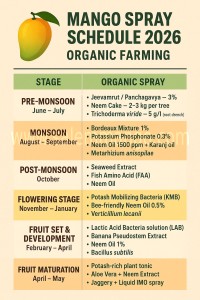
Salemmango guides based on the natural methods of effective 2027 Organic Mango Spray Calendar is tailored for Indian mango-growing regions and follows scientifically backed organic practices used by successful orchards. Best natural pesticies and Inscides are there instead of going to spend big amounts on Chemicals and Please follow natural ways for good mango cultivation.
Why Organic Spray Schedule Matters for mango farming
PRE-MONSOON
Soil & Tree Immunity Boosting, Improves soil microbes, prevents root rot, enhances nutrient absorption. Spray
MONSOON
Disease Prevention & Vegetative Growth,Controls anthracnose, dieback, fungal infections, and early pests. Spray
POST-MONSOON
Pre-Flower Strengthening.Develops new flush, strengthens flowering buds.Spary
FLOWERING STAGE
This is the most sensitive phase avoid high nitrogen and heavy spraying. Protects panicles, improves pollen activity, prevents flower drop. Spary
FRUIT SET & DEVELOPMENT
Fruit Set Support & Disease Control,Improves fruit retention, controls powdery mildew, thrips, and hoppers.
Organic Fruit Fly Management
Use traps from March to May.
Mango Spray Schedule 2027 (Organic)
Month-wise organic spray plan for mango orchards. Use this as a reference; adjust to local climate and variety.
| Month(s) / Period | Stage | Organic Spray(s) / Application | Purpose | Notes |
|---|---|---|---|---|
| June - July 2026 | Pre-monsoon / Soil & tree immunity |
|
Boost soil microbes, root health, nutrient uptake | Apply at tree basin; repeat once if soil is poor |
| August - September 2026 (Monsoon) | Monsoon disease prevention & vegetative growth |
|
Control anthracnose, fungal infections, early pests | Bordeaux allowed in organic systems but limit to once |
| October 2026 | Pre-flower strengthening |
|
Support new flush, strengthen flower buds, reduce sucking pests | Avoid heavy nitrogen at this stage |
| November 2026 | Flowering (sensitive phase) |
|
Protect panicles, improve pollen activity, prevent flower drop | Spray early morning or late evening to protect pollinators |
| February - April 2026 | Fruit set & early development |
|
Improve fruit retention, antifungal protection, pest control | Combine with good irrigation and nutrient management |
| March - May 2026 | Fruit fly management (critical) |
|
Suppress male fruit flies, reduce egg-laying and damage | Deploy traps before peak fruiting; monitor weekly |
| April - May 2026 | Pre-harvest (maturation) |
|
Improve colour, aroma, sweetness (Brix) and storability | Do not spray any products 15 days before harvest |
| May - June 2026 | Post-harvest orchard recovery |
|
Restore tree energy, rebuild reserves for next cycle | Apply compost and mulch to conserve moisture |
Disclaimer: This table is a general organic guidance. Adjust concentrations and timing to match local regulations, certified organic standards, variety sensitivity, and weather. Always test a small area before large-scale application.
FAQ — Organic Mango Spray Schedule 2027
1. Can I follow this schedule for all mango varieties?
Yes, this spray plan suits most Indian varieties including Alphonso, Banganapalli, Mallika, Kesar, Totapuri, and Salem Bangalora.
2. Is Bordeaux mixture allowed in organic mango farming?
Yes, Bordeaux 1% is permitted in organic guidelines but should be applied only once per season.
3. When should I stop spraying before harvest?
Stop all sprays 15 days before harvest to ensure zero residues.
4. What is the best organic solution for mango hoppers?
Verticillium lecanii, Neem Oil 0.5–1%, and sticky traps work effectively.
5. How to avoid mango flower drop organically?
Maintain moisture, apply KMB, avoid nitrogen fertilizers, and use cow milk spray for powdery mildew.
6. Is organic farming enough to control fruit fly?
Yes, if you use methyl eugenol traps, orchard hygiene, and organic bait sprays regularly.