
3 mins read
Last updated : 12-02-2026
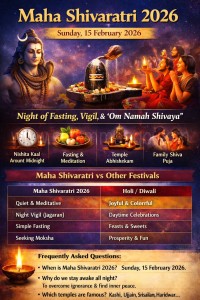
Maha Shivaratri 2026 falls on Sunday, 15 February 2026, with the main night-long worship and fasting observed through the night into Monday morning.
Maha Shivaratri, the Great Night of Shiva, is one of the most important Hindu festivals dedicated to Lord Shiva. It is observed with fasting, night-long vigil, and continuous chanting of “Om Namah Shivaya”.
Unlike colourful daytime festivals, Maha Shivaratri focuses on silence, meditation, and inner cleansing rather than outward celebration. Many families treat it as a powerful time to pray for peace, health, and spiritual growth together.
Simple picture: For one whole night, devotees keep the body light (fasting) and the mind awake (jagaran) to stay conscious and prayerful in Shiva’s presence.
| Point | Maha Shivaratri 2026 | Typical Festive Day (Holi/Diwali) |
|---|---|---|
| Mood | Quiet, meditative, introspective | Joyful, social, colourful |
| Time Focus | Night-time, especially midnight puja | Mostly day or evening |
| Food | Fasting, fruits, simple sattvic dishes | Feasts, sweets, festive meals |
| Main Acts | Abhishekam, Rudra path, chanting, jagaran | Firecrackers, rangoli, sweets |
| Spiritual Theme | Self-discipline, moksha, dissolving ego | Prosperity, joy, victory of good |
Many observe nirjal fast or fruit-and-milk fast. Some follow lighter fasting so they can stay alert during night prayers.
Devotees stay awake, sing bhajans, meditate, and attend Shiva pujas until dawn. This sharpens awareness and reduces inner inertia.
Major temples like Kashi Vishwanath (Varanasi), Mahakaleshwar (Ujjain), Srisaila Mallikarjuna (Andhra Pradesh), Umananda (Assam),Vellingiri(Tamil nadu) and Nilkanth Mahadev (Haridwar) hold special abhishekams and rituals.
Families offer water, milk, bilva leaves, dhatura, and flowers to the Shiva Linga while chanting mantras and reading from Shiva Purana.
Simple explanation for children: On Maha Shivaratri night, people don’t sleep, don’t overeat, and keep saying Shiva’s name so the mind becomes calm and clean like a still lake.
It falls on Sunday, 15 February 2026, with pujas through the night and fast-breaking on Monday after sunrise.
Fasting reduces distraction and helps the mind stay clear for prayer and meditation.
The night vigil symbolises victory over laziness and ignorance and brings spiritual benefit.
Yes. They may follow a mild fast (fruits, milk, simple food) and rest when needed. Health always comes first.
Kashi Vishwanath, Mahakaleshwar, Srisaila Mallikarjuna, Umananda, and Nilkanth Mahadev are especially renowned.